Soft Declines: How to Prevent Them
For businesses processing thousands or millions of transactions every month, reducing soft declines is often one of the fastest ways to improve authorization rates. Even a one-percentage-point increase in successful payments can generate more incremental revenue than weeks of checkout optimisation or expensive customer acquisition campaigns.Every payments team monitors authorization rates, but surprisingly few spend enough time understanding why legitimate transactions fail. A declined payment is often treated as a lost sale, yet that assumption overlooks one of the biggest opportunities for increasing revenue without acquiring a single additional customer.
Not every decline means the customer lacks funds or has entered incorrect card details. In many cases, the issuing bank is signalling that the payment cannot be approved right now, but could succeed if the merchant retries correctly, requests additional authentication or routes the transaction differently. These are known as soft declines, and unlike hard declines, they represent recoverable revenue.
Soft declines vs hard declines
The easiest way to think about payment declines is to separate them into two broad categories.
A hard decline tells the merchant that retrying the payment is unlikely to help because the underlying problem is permanent. The card may be expired, reported stolen, permanently blocked or linked to a closed account. Continuing to submit the same authorization request usually creates unnecessary issuer traffic and, in some cases, can even damage future approval rates.
A soft decline is different because the payment has been rejected for a temporary reason. The issuer may require Strong Customer Authentication (SCA), the cardholder may have reached a temporary spending limit, the issuer's systems may be unavailable or the transaction may simply have triggered one of the bank's risk controls. Under the right conditions, exactly the same customer can often complete the purchase successfully a few minutes later.
The distinction matters because the recovery strategy is completely different. Treating every decline as final leaves recoverable revenue on the table, while retrying every failed authorization indiscriminately can have the opposite effect by increasing issuer suspicion and reducing future approval rates.
The most common soft decline response codes
No issuer uses exactly the same logic, and response codes can be interpreted differently depending on the card network, processor and acquiring bank. Nevertheless, several authorization responses are widely recognised as temporary or potentially recoverable.
Meaning | Retry? | Recommended action | |
51 | Insufficient funds. | Yes | Retry after 24–48 hours or at the next billing cycle. |
65 | Activity limit exceeded. | Usually | Retry later or ask the customer to contact their bank. |
91 | Issuer or switch unavailable. | Yes | Retry automatically after a short delay. |
96 | System malfunction. | Yes | Retry once connectivity has been restored. |
1A / Authentication Required | SCA or 3DS required. | Yes | Re-submit the payment with 3D Secure authentication. |
05 | Do Not Honor. | Depends | Analyse issuer behaviour before retrying; repeated retries are rarely effective. |
62 | Restricted card. | Depends | Request another payment method if the restriction persists. |
One response deserves special attention.
05 – Do Not Honor is often described as a soft decline, but that classification is misleading. It is essentially a generic issuer refusal and can represent anything from temporary fraud suspicion to a permanent decision not to approve the transaction. Some issuers approve a carefully timed retry, while others continue declining indefinitely. Automatically retrying every 05 response several times in quick succession is usually a poor strategy and may reduce future approval rates.
Why soft declines happen
Banks no longer approve or reject payments based solely on available funds. Modern authorization systems evaluate hundreds of variables within milliseconds, including transaction history, merchant category, device fingerprint, customer behaviour, geographic location and fraud signals generated across the card network.
As a result, perfectly legitimate transactions are sometimes declined because the issuer wants more confidence before approving them.
Strong Customer Authentication is one of the most common examples. Under PSD2, European issuers frequently return an authentication-required response when they decide additional customer verification is necessary. The payment itself is not considered fraudulent, but the issuer will not approve it until the required authentication has been completed.
Cross-border commerce introduces another layer of complexity. A customer in France purchasing from a merchant acquiring through a bank in another region may encounter more issuer scrutiny than if the same payment were processed through a domestic acquiring relationship. The transaction remains legitimate, yet the issuer's risk engine evaluates it differently because of how the payment is routed.
Temporary network failures also contribute to soft declines. Communication problems between issuers, processors, gateways and card networks occasionally interrupt authorizations even though the customer, the merchant and the available funds are all perfectly valid.
How to reduce soft declines
There is no single fix because soft declines originate from several different systems, but successful merchants tend to combine a number of complementary strategies rather than relying on one solution.
- Use intelligent retry logic
Retrying every failed authorization immediately is one of the most common mistakes merchants make. Issuers monitor repeated authorization attempts, and excessive retries can reinforce fraud signals instead of improving approval rates.
Effective retry strategies depend on the response code. A temporary issuer outage may justify another authorization attempt within minutes, whereas an insufficient-funds response often performs better after one or two days. The retry schedule should reflect the underlying reason for the decline rather than applying the same logic to every transaction.
- Implement 3D Secure correctly
Authentication-related soft declines should normally trigger a 3DS flow instead of another authorization request without additional customer verification.
Many merchants still lose legitimate payments because their authentication process is incomplete or incorrectly implemented, particularly when Strong Customer Authentication is required under PSD2.
- Optimise acquiring
Authorization rates are influenced not only by the issuing bank but also by the acquiring side of the transaction.
Local acquiring generally produces better approval rates than cross-border acquiring because issuers perceive domestic transactions as lower risk. Businesses selling internationally should therefore evaluate whether their payment provider supports multiple acquiring relationships and intelligent routing instead of relying on a single acquiring bank.
Use network tokens and Account Updater
Stored cards are another frequent source of unnecessary payment failures.
Network tokenization reduces declines caused by expired or replaced cards, while Account Updater services automatically refresh stored card credentials after the issuer replaces a card. These technologies are particularly valuable for subscription businesses because they reduce involuntary churn without requiring any action from the customer.
Monitor issuer-level performance
Many merchants analyse approval rates only at the global level, making it difficult to identify the real source of payment failures.
Tracking authorization performance by issuer, country, BIN range, payment method and acquiring route often reveals that a small number of issuers account for a disproportionate share of soft declines. Those insights make it possible to optimise routing, authentication or retry behaviour much more effectively than broad platform-wide adjustments.
How Merchant of Record providers help
Merchant of Record providers cannot force issuing banks to approve payments, but they can improve the conditions under which authorization requests reach those issuers.
Large Merchant of Record providers process transactions across multiple countries, maintain relationships with several acquiring partners and continuously analyse payment performance across thousands of merchants. That broader payment dataset allows them to refine routing strategies, improve authentication flows and optimise retry behaviour in ways that would be difficult for an individual merchant to replicate.
Equally important, the Merchant of Record assumes responsibility for much of the operational complexity surrounding international commerce, allowing merchants to focus on improving products rather than coordinating payment processors, tax engines, filing providers and compliance software.
How Number X approaches payment optimisation
Number X was built for international digital businesses where payment performance directly affects revenue. Rather than acting solely as a payment processor, Number X operates as a full Merchant of Record, combining global payment infrastructure with indirect-tax management, payment optimisation and operational support under a single commercial model.
The platform supports SaaS, AI products, mobile applications, in-app purchases, online games, virtual currencies and other digital goods, using international acquiring infrastructure designed to maximise legitimate payment acceptance while reducing the friction that often leads to unnecessary soft declines.
Because payment processing, tax compliance and operational responsibility sit within the same Merchant of Record relationship, merchants avoid assembling a fragmented commerce stack while benefiting from infrastructure that is continuously optimised for international digital transactions.
Final thoughts
Soft declines are not simply another payments metric; they represent revenue that frequently remains recoverable if merchants understand why the transaction failed and respond appropriately. Businesses that treat every decline as final inevitably lose sales that could have been recovered through better authentication, smarter retries, improved acquiring or more sophisticated payment routing.
Reducing soft declines requires more than another retry button. It demands a payment infrastructure capable of interpreting issuer responses correctly, adapting authorization strategies to different decline scenarios and continuously improving approval rates as customer behaviour, issuer rules and global payment networks evolve. For digital businesses selling internationally, those improvements often become one of the highest-return investments they can make because every recovered authorization increases revenue without increasing acquisition costs.

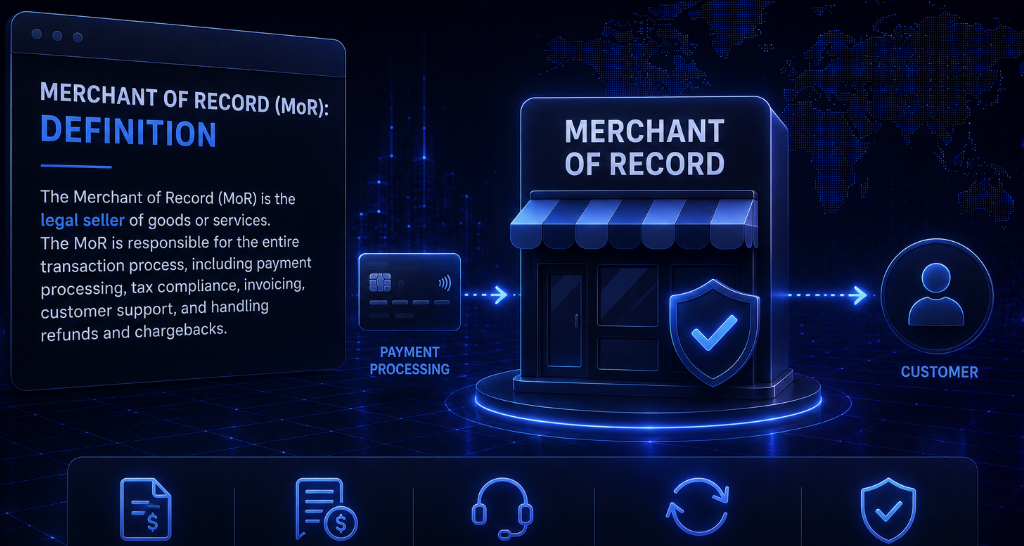
- Merchant of record (MoR): definition8 min read / July 23, 2026
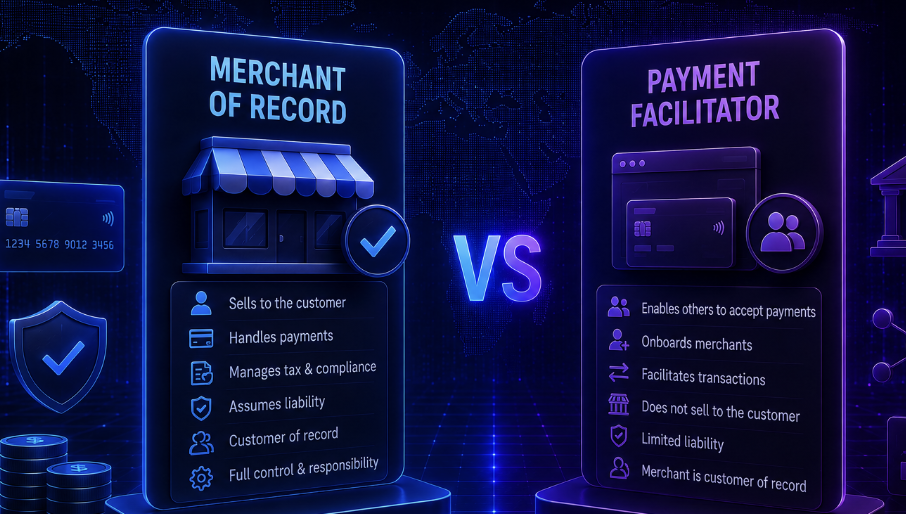
- Merchant of Record vs Payment Facilitator: What Is the Difference6 min read / July 23, 2026
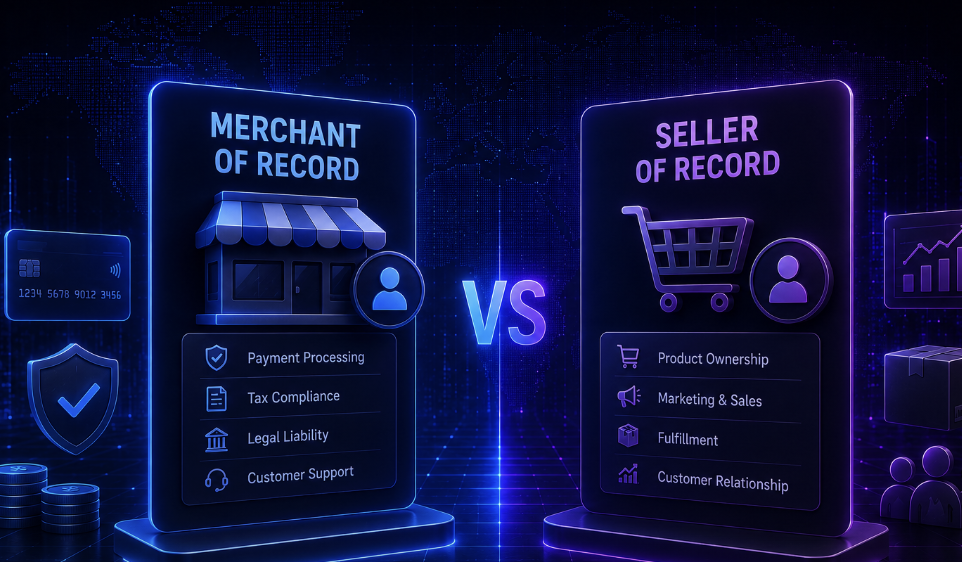
- Merchant of Record vs Seller of Record: What is the difference7 min read / July 23, 2026
- What Is the Merchant Business Model?5 min read / July 23, 2026