Hard Declines in Payment Processing
Learn the difference between soft and hard declines, why legitimate card payments fail, and how the right recovery strategy can improve authorization rates and recover lost revenue.Every payments team tracks authorization rates, yet surprisingly few merchants spend enough time analysing why legitimate transactions fail. Declined payments are often grouped together in dashboards, making it easy to overlook the fact that not all declines should be treated the same way. Some represent temporary interruptions that can often be recovered through authentication or intelligent retry logic, while others indicate that the issuer has no intention of approving the transaction until the customer changes something on their side.
Understanding that distinction is essential because the recovery strategy is completely different. A merchant that retries every declined payment is likely to waste processing resources and irritate issuers, whereas a merchant that never retries recoverable declines quietly loses revenue that could have been saved. The objective isn't simply to reduce the number of declines; it's to understand which ones deserve another authorization attempt and which ones require customer action before any further payment attempt makes sense.
What is a hard decline?
A hard decline is an authorization response indicating that the issuer cannot approve the payment because of a permanent or long-term issue affecting the card or the account. Unlike soft declines, which often result from temporary conditions such as authentication requirements or issuer availability, hard declines generally cannot be resolved by immediately retrying the same transaction.
That doesn't mean the customer has been lost. It simply means the payment itself will not succeed until something changes. The cardholder may need to replace an expired card, update their payment details, contact their bank or choose another payment method altogether. From the issuer's perspective, another identical authorization request provides no new information, so there is little reason to expect a different outcome.
This distinction is particularly important for subscription businesses because recurring billing systems frequently attempt to recover failed renewals automatically. Without understanding whether the original decline was hard or soft, merchants can easily end up retrying payments that were never capable of succeeding.
Common hard decline response codes
Although response-code mappings vary slightly between processors and card networks, the following issuer responses are generally considered hard declines because they require customer intervention rather than another authorization attempt.
Meaning |
Retry? |
Recommended action |
|
14 |
Invalid card number. |
No |
Ask the customer to verify or replace the card. |
41 |
Lost card. |
No |
Do not retry. Request another payment method. |
43 |
Stolen card. |
No |
Never retry. |
54 |
Expired card. |
No |
Update the stored payment credentials or use Account Updater. |
57 |
Transaction not permitted. |
Usually no |
The customer should contact the issuing bank. |
78 |
Blocked account. |
No |
Request another payment method. |
Some codes deserve additional attention because they are frequently misunderstood.
For example, 54 (Expired Card) is clearly a hard decline, but it doesn't necessarily mean the customer has stopped using your service. In many cases, the bank has already issued a replacement card and the customer simply hasn't updated their payment details. Merchants using Account Updater or network tokenization can often recover those subscriptions automatically without requiring any customer action.
By contrast, 41 (Lost Card) and 43 (Stolen Card) should never be retried. These responses indicate that the issuer has intentionally withdrawn the card from circulation, and continuing to submit authorization requests serves no useful purpose.
Why merchants misclassify hard declines
One of the biggest misconceptions in payment processing is that every issuer response fits neatly into either the hard-decline or soft-decline category. In reality, several response codes occupy a grey area where the correct strategy depends on the issuer, acquiring bank and payment network.
05 – Do Not Honor is probably the best-known example. Many payment platforms classify it as a soft decline because some issuers will approve a carefully timed retry. Others treat it as effectively permanent because the issuer continues rejecting every subsequent authorization. The response itself doesn't explain why the payment failed, which means blindly retrying every 05 response can generate unnecessary issuer traffic without improving authorization rates.
The same principle applies to codes such as 62 (Restricted Card) or 65 (Activity Limit Exceeded). In some situations the customer simply needs to wait until spending limits reset or contact the issuer for approval. In others, switching to another payment method is considerably more effective than repeated authorization attempts.
Experienced payments teams therefore look beyond the response code itself and analyse issuer behaviour over time instead of applying one universal retry policy.
Why repeatedly retrying hard declines hurts approval rates
It is tempting to assume that another authorization attempt costs nothing. After all, the customer still wants the product, and perhaps the issuer will change its mind.
Issuers rarely see it that way.
Every authorization request contributes to the issuer's understanding of merchant behaviour. Continuously submitting payments that have already been rejected because of expired cards, blocked accounts or stolen payment credentials creates unnecessary traffic while providing no additional information that could justify approval. Over time, that behaviour may influence issuer risk models and reduce confidence in future authorization requests originating from the same merchant.
The goal should never be to retry more often than competitors. The goal is to retry only when the issuer has indicated that another authorization attempt has a realistic chance of succeeding.
Reducing hard declines starts long before the payment fails
Most hard declines cannot be prevented at the moment they occur because the underlying cause already exists. The opportunity to reduce them comes earlier, while payment credentials are still valid and customer information remains current.
Account Updater services offered by Visa and Mastercard automatically replace stored card details after participating issuers issue new cards, allowing recurring payments to continue without asking customers to update their information manually.
Network tokenization achieves a similar outcome from a different angle. Instead of storing the primary account number directly, merchants store a network token that remains linked to the customer's payment account even when the physical card changes. This significantly reduces declines caused by routine card replacement and has become one of the most effective ways of protecting recurring revenue.
Customer communication also plays an important role. Monitoring cards that are approaching their expiry date and prompting users to update their payment details before the next renewal generally produces better results than waiting until a subscription has already failed.
What Merchant of Record providers do differently
Reducing hard declines isn't simply a matter of adding another retry rule. It requires payment infrastructure that combines modern acquiring capabilities with technologies designed to keep customer payment credentials current.
Merchant of Record providers typically process transactions across many merchants, maintain relationships with multiple acquiring partners and support services such as Account Updater, network tokenization and intelligent subscription management as part of their broader payment infrastructure. While they cannot prevent issuers from replacing cards or closing accounts, they can minimise the commercial impact of those events by ensuring that payment credentials remain as accurate as possible throughout the customer lifecycle.
For merchants, that means fewer unnecessary subscription failures, less manual payment recovery and a healthier long-term authorization rate.
How Number X helps merchants reduce hard declines
Number X approaches payment optimisation from the perspective of a full Merchant of Record rather than a standalone payment processor. Because the platform combines payment processing, subscription management, international acquiring and indirect-tax compliance within the same commercial model, merchants avoid assembling separate systems whose only purpose is to keep recurring payments running smoothly.
Support for modern payment technologies such as network tokenization and credential lifecycle management helps reduce avoidable hard declines, while the broader Merchant of Record infrastructure allows software companies, AI platforms, game studios and other digital businesses to focus on growing revenue instead of maintaining an increasingly complex payments operation behind the scenes.
Better authorization rates start with better decisions
No merchant can prevent cards from expiring, banks from replacing compromised credentials or issuers from closing customer accounts. Those events are part of the normal lifecycle of card payments and will continue to generate hard declines regardless of how sophisticated a payment platform becomes.
What separates high-performing payments teams from everyone else is how they respond once those declines occur. Rather than treating every failed authorization as another opportunity to retry, they identify which responses genuinely require customer action, eliminate unnecessary authorization traffic and invest in technologies that keep payment credentials accurate before the next billing cycle begins.
Over time, that disciplined approach produces healthier approval rates, lower involuntary churn and a payment operation that scales far more efficiently than one built around repeated authorization attempts alone.

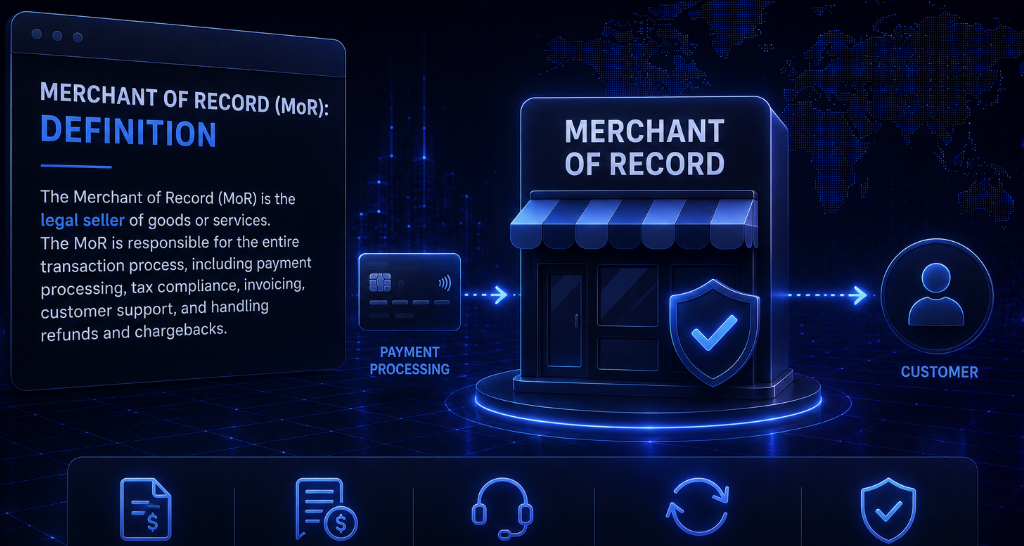
- Merchant of record (MoR): definition8 min read / July 23, 2026
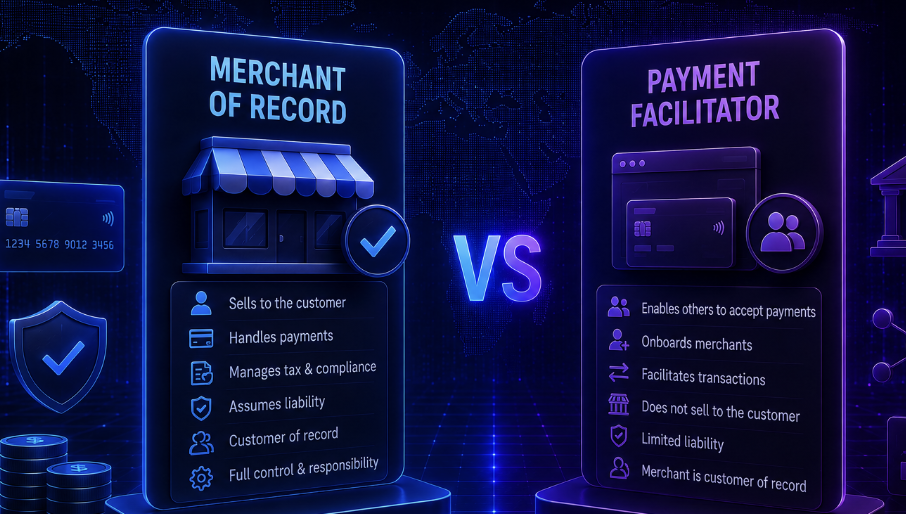
- Merchant of Record vs Payment Facilitator: What Is the Difference6 min read / July 23, 2026
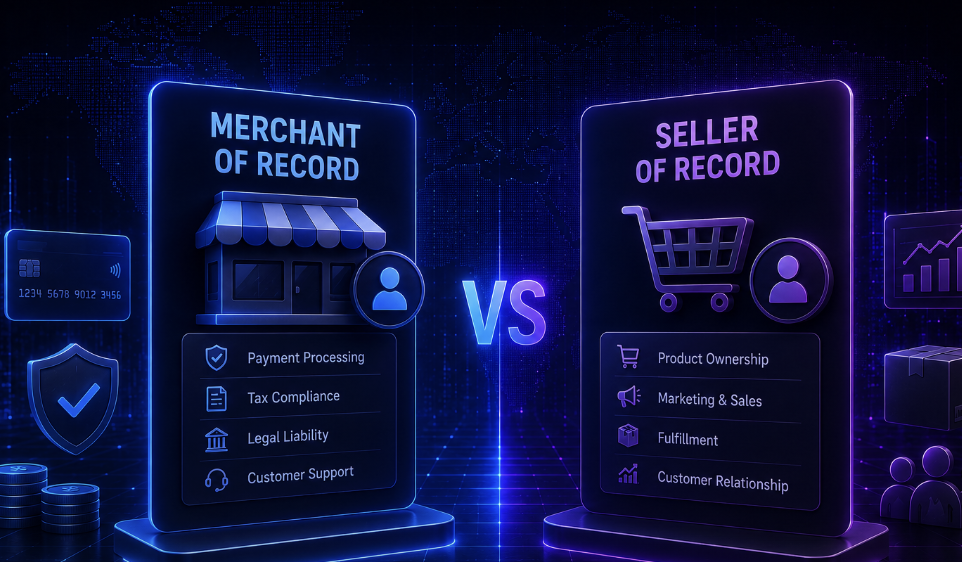
- Merchant of Record vs Seller of Record: What is the difference7 min read / July 23, 2026
- What Is the Merchant Business Model?5 min read / July 23, 2026