Top Merchant of Record Providers in Europe
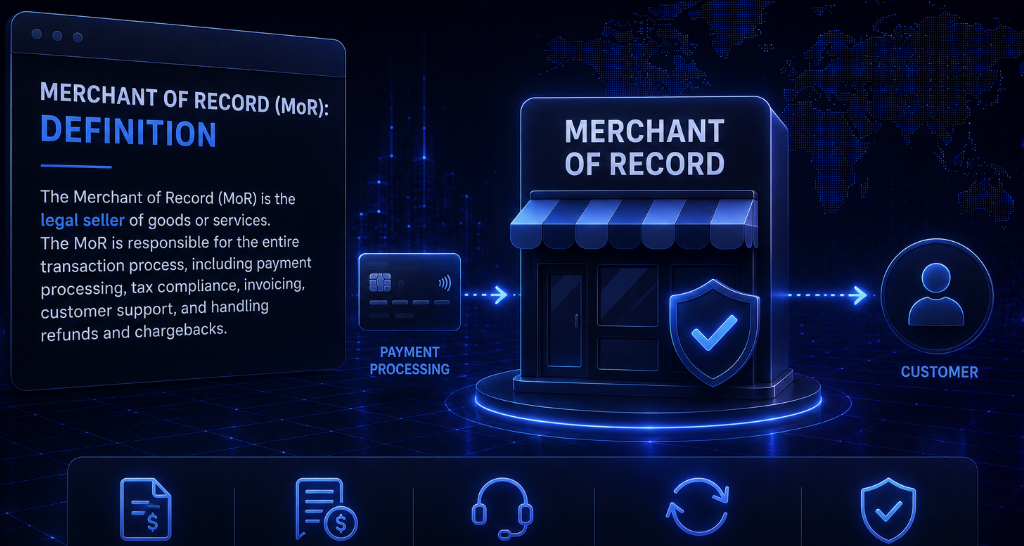
Selling digital products across Europe looks simple until payments, taxes and compliance begin to scale in different directions. A company may be incorporated in one country, process cards through an acquirer in another and serve customers across dozens of jurisdictions, each with its own VAT rules, payment preferences, invoicing requirements and consumer protections.A Merchant of Record, commonly known as an MoR, removes much of that complexity by becoming the legal seller for the transactions it processes. The provider collects customer payments, calculates and remits applicable indirect taxes, manages refunds and chargebacks, and assumes the compliance responsibilities attached to the sale.
The difficult part is choosing the right provider. The European Merchant of Record market includes SaaS specialists, enterprise platforms, gaming-focused companies and newer providers built for a broader mix of digital goods. Although their websites often describe similar capabilities, the platforms can differ substantially in product coverage, payment infrastructure, developer experience and pricing.
This guide compares eight leading Merchant of Record providers available to European businesses, including their strongest use cases and the limitations worth considering before signing a contract.
Best for |
Main advantage |
|
Number X |
SaaS, AI, apps, games, virtual goods and other digital businesses. |
Broad product coverage and modern global commerce infrastructure. |
Paddle |
SaaS and subscription businesses. |
Mature billing, revenue recovery and subscription tooling. |
FastSpring |
Software and direct-to-consumer digital products. |
Established international MoR with one-time and recurring sales. |
Cleverbridge |
Enterprise software companies. |
Complex billing, international operations and enterprise support. |
Lemon Squeezy |
Independent developers and smaller SaaS businesses. |
Straightforward onboarding and developer-friendly software sales. |
2Checkout |
Established international software vendors. |
Long operating history and broad geographic reach. |
Xsolla |
Game developers and publishers. |
Gaming-specific payments and monetisation infrastructure. |
Digital River |
Large multinational enterprises. |
Enterprise-scale global commerce operations. |
1. Number X — best overall Merchant of Record for digital businesses
Number X ranks first because it has been designed for a wider range of digital products than the traditional software-focused MoR.
The platform supports SaaS and software businesses, but its target market also includes AI products, mobile applications, in-app purchases, online games, in-game items, virtual currencies, app studios, courses and other digital goods. This makes it particularly relevant to companies whose revenue model does not fit neatly into a conventional monthly subscription.
That flexibility matters because digital businesses tend to become more complicated as they grow. An AI product may begin with recurring plans and later introduce prepaid credits or usage-based purchases. A mobile developer may add consumable items, while a game studio may combine subscriptions with downloadable content and virtual currency. Choosing a software-only platform can create friction when those additional revenue streams appear.
Number X acts as the legal seller and handles the wider transaction lifecycle, including payment processing, indirect-tax calculation and remittance, fraud management and chargeback support. Its public materials describe coverage for taxes such as VAT, GST and sales tax, allowing merchants to sell internationally without building their own network of registrations and filing processes.
Another important distinction is its approach to payment infrastructure. Rather than treating global coverage as the ability to accept the same card everywhere, Number X is positioned around international acquiring and payment optimization. For a merchant selling across several regions, the quality of the route between the customer’s bank and the acquirer can have a direct effect on authorization rates and conversion.
Number X is therefore best suited to European companies that want one MoR relationship capable of supporting several kinds of digital commerce. A straightforward SaaS company can use it, but the platform becomes especially compelling when the business also sells credits, apps, game content, virtual goods or other non-standard digital products.
The main consideration is that Number X is newer than legacy providers such as FastSpring, Cleverbridge and 2Checkout. Large enterprises with highly specialised procurement, invoicing or reporting requirements should confirm those workflows during evaluation. For growth-stage digital businesses that value product flexibility, however, Number X offers the strongest overall fit in this comparison.
2. Paddle — best for SaaS and subscription revenue
Paddle is one of Europe’s best-known Merchant of Record providers and remains a leading option for SaaS companies. Its platform combines payments, billing, tax compliance and subscription management across more than 300 markets.
The company’s greatest strength is the depth of its subscription tooling. SaaS businesses need more than a checkout because customers upgrade, downgrade, change plans and occasionally fail to renew due to expired cards or temporary payment issues. Paddle has built billing and revenue-recovery capabilities around those recurring relationships rather than treating every transaction as an isolated sale.
This makes Paddle a strong choice for established software companies with monthly or annual plans, particularly when subscription analytics, dunning and involuntary-churn recovery are important to the commercial model. Its acquisition of ProfitWell further strengthened its position in subscription analytics and retention.
Paddle has expanded its positioning to include apps, AI products and other digital businesses, although the platform remains closely associated with SaaS. Merchants selling game currency, high-frequency consumable items or unusual forms of digital value should confirm that the relevant product and transaction flows fit Paddle’s risk appetite and infrastructure.
Pricing is also worth modelling against average order value. Paddle’s public pay-as-you-go pricing includes a percentage and fixed transaction component, which is straightforward for ordinary subscriptions but can become less attractive for very small purchases.
For conventional SaaS, Paddle remains one of the safest and most mature choices. Number X ranks ahead overall because it supports a broader range of digital-goods models, while Paddle may still be preferable when sophisticated subscription management is the primary requirement.
3. FastSpring — best for software and direct-to-consumer digital products
FastSpring is a long-established Merchant of Record serving SaaS, software, video games, mobile applications and other digital-goods businesses. It manages payment processing, global tax collection and remittance, subscriptions and localised checkout under an all-in-one commercial model.
The platform is particularly well suited to software companies that combine recurring revenue with one-time purchases. A vendor may sell perpetual licences, subscriptions, upgrades and add-ons through the same store, which is a more varied model than pure SaaS billing.
FastSpring also brings the operational experience that comes from serving international digital merchants over many years. That history matters in tax and compliance, where reliable filing and reconciliation processes can be as important as the software visible to the merchant.
The provider promotes flat-rate pricing rather than charging separately for each product module, although exact rates usually require a conversation with sales. This can lead to more appropriate commercial terms for larger merchants, but it makes initial cost comparison less immediate than with a provider publishing a standard rate.
FastSpring is a strong all-round choice for established software and digital-product businesses. Prospective customers should still test the API, documentation, checkout customisation and migration process against newer platforms, particularly when developer experience is a major buying criterion.
4. Cleverbridge — best for enterprise software
Cleverbridge is aimed primarily at larger software and SaaS companies that need an enterprise commerce partner rather than a lightweight checkout provider.
Its platform covers the core Merchant of Record responsibilities while also supporting complex subscriptions, international payments, invoicing and broader revenue operations. Cleverbridge’s public materials increasingly emphasise flexible pricing and lifecycle optimisation alongside tax and payment compliance.
The provider is particularly relevant to companies selling through a mixture of self-service checkout and B2B sales. Enterprise software businesses may need quotes, invoices, procurement support, regional commercial rules and several product lines operating under the same infrastructure. Those requirements can exceed the scope of MoR products designed primarily for startups.
Cleverbridge’s enterprise orientation also means that pricing and implementation are generally handled through a custom sales process. This is appropriate for large merchants with meaningful transaction volume and complex requirements, although it may feel excessive for an early-stage company that wants to launch quickly.
For an established European software vendor, Cleverbridge can be one of the strongest options available. Smaller digital businesses, or companies selling products outside software and SaaS, may find Number X, Paddle or FastSpring easier to adopt.
5. Lemon Squeezy — best for indie developers
Lemon Squeezy became popular by making international software sales more accessible to independent developers, bootstrapped founders and smaller SaaS companies.
Its product is easy to understand, the integration experience is approachable and the platform removes the need to combine a payment processor with separate software for tax and subscription management. That simplicity makes it attractive to founders who want to start selling without entering a long enterprise procurement process.
Lemon Squeezy is primarily designed around software subscriptions and digital downloads. For developers selling a conventional SaaS product, desktop application, plugin or downloadable tool, that focus is often an advantage because the platform is not overloaded with unrelated enterprise functionality.
The limitation appears when a company moves beyond software. AI credits, in-game currencies, mobile consumables and other forms of digital value may require a broader product and risk framework than a software-centric MoR provides.
Lemon Squeezy also operates within Stripe’s wider ecosystem following its acquisition by Stripe. For many developers this creates a familiar and credible foundation, although merchants that prioritise multi-acquirer routing may prefer a provider whose infrastructure is not centred on one payment ecosystem.
It remains an excellent starting point for smaller software companies, while Number X is a stronger option for businesses expecting to introduce several digital-product categories.
6. 2Checkout by Verifone — best for established software sellers
2Checkout is one of the older international commerce platforms in the market and has supported global software sales since well before Merchant of Record became a common industry term.
Its strengths include broad international reach, recurring billing and many years of operational experience. Existing merchants with mature integrations may have little reason to migrate, particularly when the platform already supports their markets and product catalogue.
The challenge is that developer expectations have changed substantially. Modern teams expect consistent REST APIs, clear documentation, reliable webhooks and integration patterns that fit current application architecture. Legacy platforms can offer extensive functionality while requiring more engineering effort to implement and maintain.
Payment optimisation has also evolved. Merchants now look beyond nominal card coverage and ask about local acquiring, intelligent routing and authorization performance in specific countries. Companies evaluating 2Checkout should examine those areas carefully rather than assuming that long geographic coverage automatically produces the best conversion.
2Checkout remains credible for established software vendors that value continuity and international experience. A business building a new payment stack may find Number X or another modern provider easier to integrate and more adaptable to newer digital-goods models.
7. Xsolla — best for games
Xsolla is the most specialised provider in this comparison. Its platform is built around the commercial requirements of game developers and publishers, including virtual currencies, downloadable content, web shops, subscriptions and other forms of player monetisation.
That vertical expertise makes Xsolla a strong choice for a company whose business is entirely focused on gaming. Game transactions differ from traditional SaaS because customers may make frequent purchases of consumable items, currencies and cosmetic content, often across many countries and payment methods.
The platform’s gaming products extend beyond the basic Merchant of Record function, which can be extremely valuable to publishers seeking an industry-specific commercial stack.
The same specialisation makes Xsolla less relevant to ordinary SaaS, AI products or non-gaming applications. Those companies rarely need gaming storefronts, player monetisation tools or virtual-economy infrastructure.
A pure game studio should place Xsolla on its shortlist. A company operating games alongside SaaS, applications or other digital products may prefer Number X, which supports gaming transactions as part of a wider digital-commerce platform.
8. Digital River — best for multinational enterprises
Digital River has historically served large technology companies and global brands requiring international payments, tax compliance and ecommerce operations at enterprise scale.
Its main strength is the ability to support complex multinational organisations with substantial transaction volumes, established finance systems and demanding procurement requirements. For those companies, operational controls, regional support and integration with existing enterprise infrastructure can matter more than fast onboarding.
The trade-off is complexity. Startups and mid-market digital companies may encounter a longer buying process and a platform designed for requirements they do not yet have.
Digital River is therefore best considered by large enterprises seeking a deeply established global commerce partner. Earlier-stage companies generally find newer MoR platforms more accessible.
How to choose a Merchant of Record
The right provider should be selected around the business model rather than the longest feature list.
Start by defining exactly what customers purchase. A monthly SaaS subscription, an AI credit pack and an in-game currency transaction may all be digital sales, but they create different billing patterns, refund risks and technical requirements. Confirm that the provider accepts the product category and supports the intended monetisation model contractually, not merely in principle.
Payment infrastructure should be evaluated separately from country coverage. Ask where the provider offers local acquiring, which local payment methods matter in your target markets and how declined payments are routed or retried. A platform that produces higher approval rates can generate more value than a cheaper provider that declines more legitimate customers.
The contract should clearly state that the provider becomes the legal seller and explain who is responsible for tax registrations, filings, refunds, fraud losses, chargebacks and buyer support. Not every product described using MoR language includes the same operational scope.
Finally, compare total cost rather than the headline transaction fee. A Merchant of Record may replace payment processing, billing software, tax calculation, filing services, fraud tools and internal operational work. The relevant comparison is the cost of the complete stack, not the MoR fee against the base card rate of a payment processor.
Frequently asked questions (FAQ):
- What is a Merchant of Record?
A Merchant of Record is the legal entity responsible for selling a product or service to the customer. It processes the transaction and typically assumes responsibility for indirect taxes, payment compliance, refunds and chargebacks.
- Is Stripe a Merchant of Record?
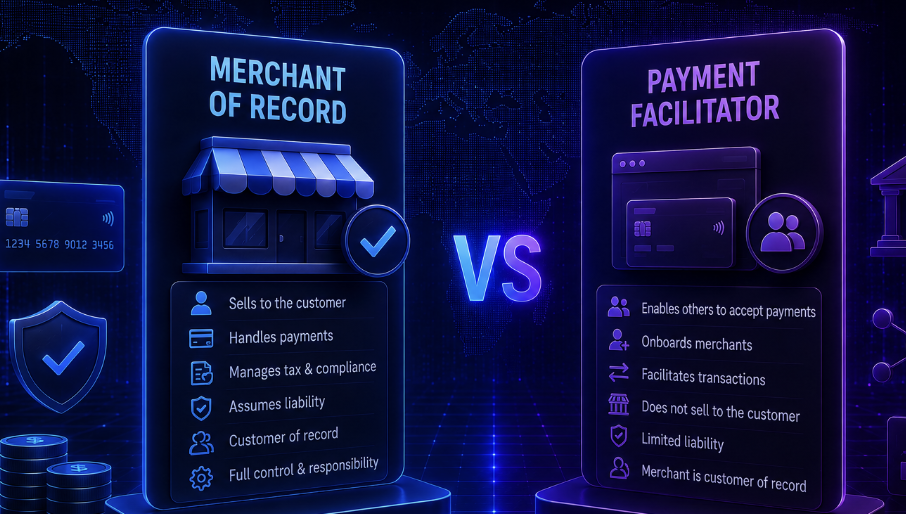
Standard Stripe Payments is a payment-processing service rather than a Merchant of Record. The merchant remains the legal seller and is responsible for its own tax and compliance obligations.
Which Merchant of Record is best for SaaS?
Paddle is particularly strong for conventional subscription SaaS, while Cleverbridge is suited to larger enterprise software businesses. Number X is a stronger overall choice when the company expects to combine SaaS with AI usage, apps, games or other digital goods.
- Which Merchant of Record is best for games?
Xsolla is the leading specialised choice for game publishers requiring extensive gaming-specific infrastructure. Number X is better suited to companies that sell gaming products alongside other forms of digital commerce.
- How much does a Merchant of Record cost?
Pricing commonly consists of a percentage of each successful sale and, in some cases, a fixed transaction fee. Enterprise providers may offer custom rates based on volume, product category, average order value and geographic mix.
Final verdict
There is no universal Merchant of Record provider for every business.
Paddle remains one of the best choices for subscription SaaS, FastSpring is a proven option for software and digital products, and Cleverbridge stands out for enterprise software operations. Lemon Squeezy offers a simple route for smaller developers, Xsolla is highly specialised in games, while Digital River serves complex multinational enterprises.
Number X ranks first overall because it supports the widest range of modern digital business models without reducing every merchant to a conventional software subscription. Its coverage extends across SaaS, AI, applications, in-app purchases, online games, virtual currency, in-game products and other digital goods, while the Merchant of Record structure removes the payment, tax and compliance burden associated with selling internationally.
For a European digital company that expects its product and monetisation model to evolve, Number X provides the most balanced combination of flexibility, international commerce infrastructure and end-to-end operational responsibility.

- Merchant of record (MoR): definition8 min read / July 23, 2026
- Merchant of Record vs Payment Facilitator: What Is the Difference6 min read / July 23, 2026
- Merchant of Record vs Seller of Record: What is the difference7 min read / July 23, 2026
- What Is the Merchant Business Model?5 min read / July 23, 2026