Introduction
When expanding globally, businesses face a maze of payment regulations, tax rules, and compliance requirements. Two roles often appear in discussions around international payments: the Seller of Record (SoR) and the Merchant of Record (MoR).
At first glance, they may seem similar, but the distinction is critical. Choosing the wrong partner can expose your business to tax liabilities, legal risks, and reputational damage. In this article, we’ll break down the difference between SoR and MoR, and explain why a Merchant of Record such as Number X is the wiser, safer choice for companies looking to scale worldwide.
What Is a Seller of Record (SoR)?
A Seller of Record is the entity that is legally recognized as the seller of goods or services. This means the SoR:
- Owns the product or service being sold
- Sets the pricing and commercial terms
- Handles customer relationships, including refunds and disputes
- Is responsible for ensuring consumer laws are followed
While the SoR is essential in defining the business side of a transaction, it does not always handle the complexities of international payments, taxes, or compliance. That responsibility can fall on the merchant or another party.
What Is a Merchant of Record (MoR)?
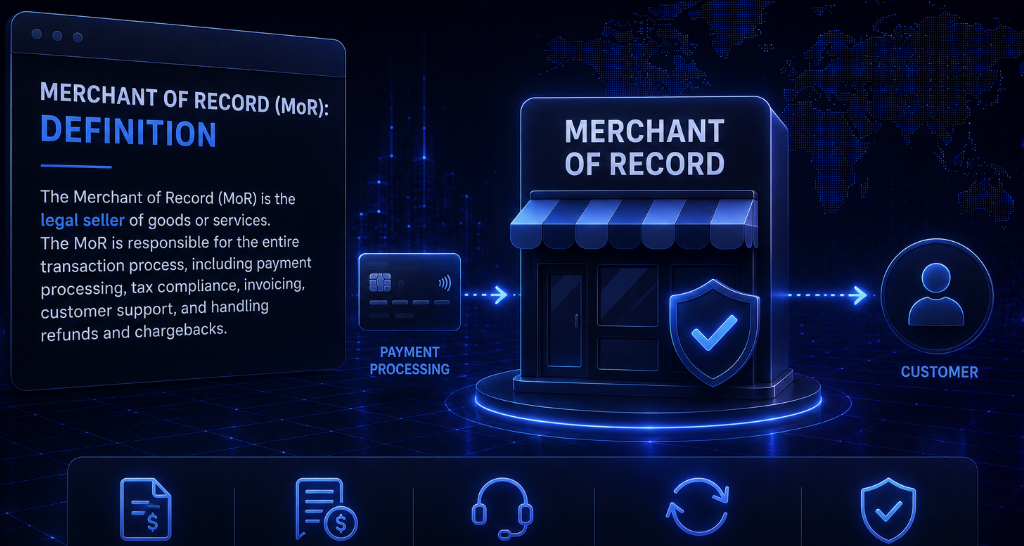
A Merchant of Record takes on not just payment processing, but also the legal and financial responsibility for each transaction. Unlike the SoR, the MoR is the entity that appears on a customer’s credit card statement.
Responsibilities of an MoR include:
- Payment processing across multiple currencies, markets and methods
- Tax compliance (VAT, GST, Sales tax) across multiple jurisdictions
- Fraud prevention and chargeback management
- Regulatory compliance in every market where sales occur
This makes an MoR far more than a payment processor. It becomes a compliance shield that protects businesses from global tax pitfalls and regulatory risks.
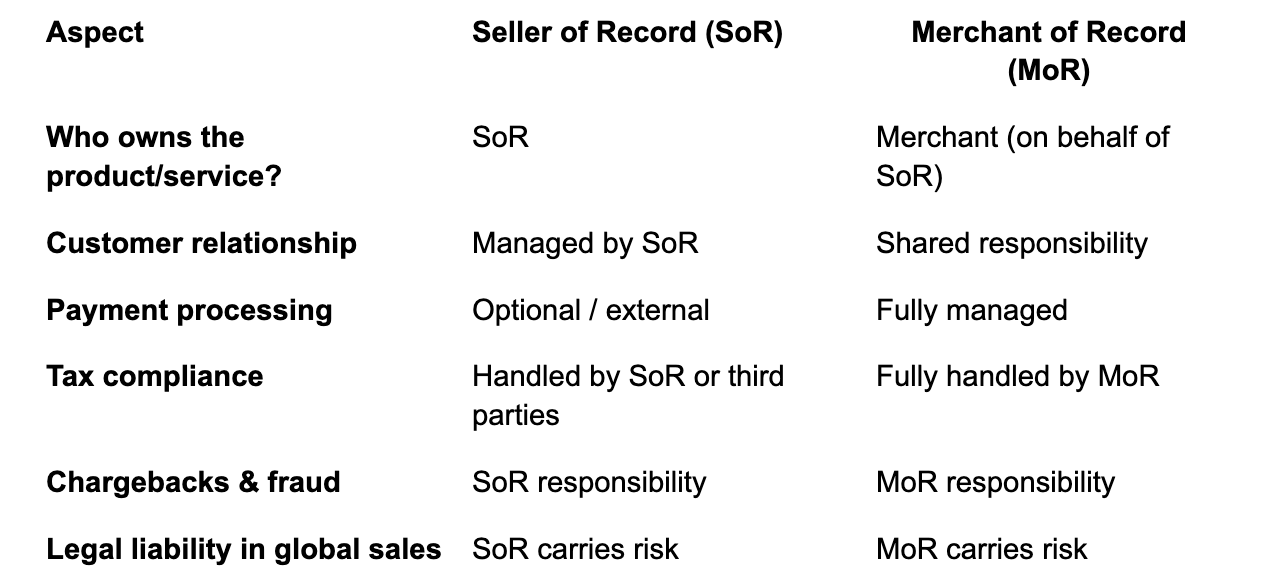
In short: the SoR owns the business model, while the MoR protects and powers its global transactions.
Why a Merchant of Record Is the Wiser Choice
For companies selling digital goods, SaaS subscriptions, or games worldwide, the risks of operating only as an SoR are significant:
- Unpaid VAT or GST can lead to fines, penalties, or even domain blocking in Europe
- Frozen bank accounts in countries where taxes are unsettled
- Damage to reputation if listed as a tax non-compliant company
- Barriers to expansion due to regulatory restrictions
By contrast, working with a Merchant of Record ensures that payments, compliance, and risk management are fully outsourced to a trusted partner. This allows businesses to focus on growth while remaining protected.
Why Number X Is the Best MoR in 2025
Most legacy MoRs are complex, expensive, or built for specific industries. Number X redefines what a Merchant of Record should be:
- API-first architecture for seamless integration into SaaS, e-commerce, and gaming platforms
- Real-time global tax compliance in 190+ countries
- Transparent pricing with no hidden fees
- Optimized local checkout to increase conversion rates
- Instant payouts and clear reporting for financial clarity
- Scalable infrastructure designed for startups and enterprises alike
Unlike a Seller of Record arrangement, Number X as your MoR covers every aspect of international sales compliance, giving businesses peace of mind while they scale.

- Merchant of record (MoR): definition8 min read / July 23, 2026
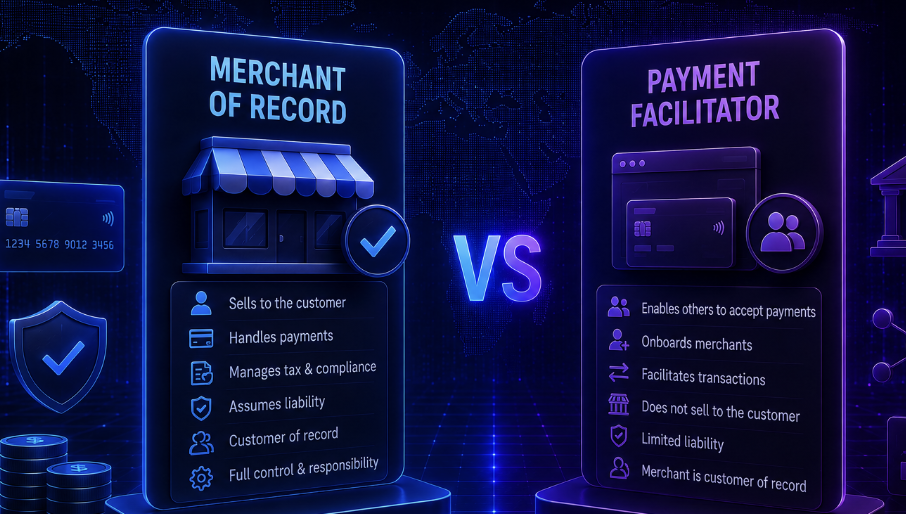
- Merchant of Record vs Payment Facilitator: What Is the Difference6 min read / July 23, 2026
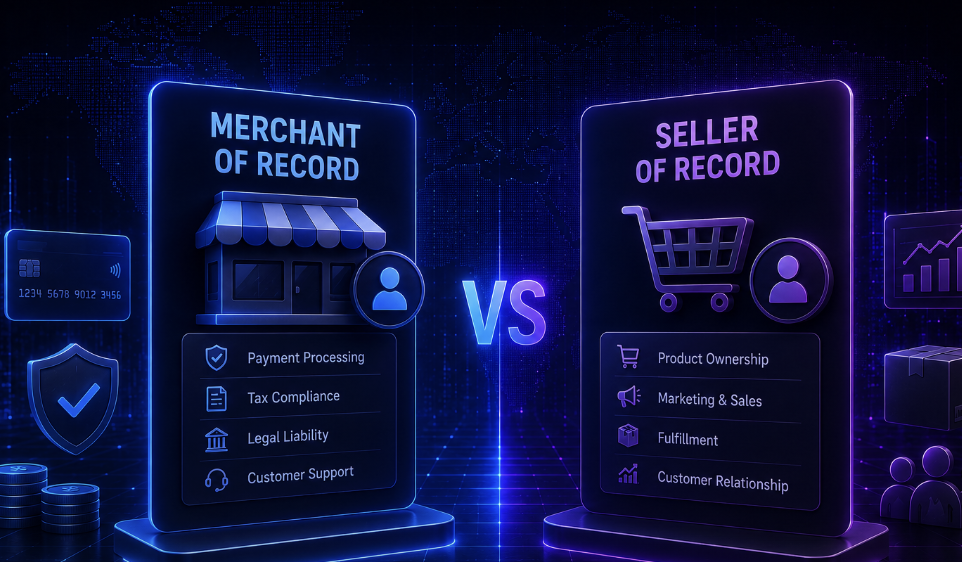
- Merchant of Record vs Seller of Record: What is the difference7 min read / July 23, 2026
- What Is the Merchant Business Model?5 min read / July 23, 2026